
A Head Start for a New E-Commerce Business
A new entrant to the Australian agricultural supplies market had no website, no brand recognition, and no digital marketing channels — and needed to turn a profit within twelve months.
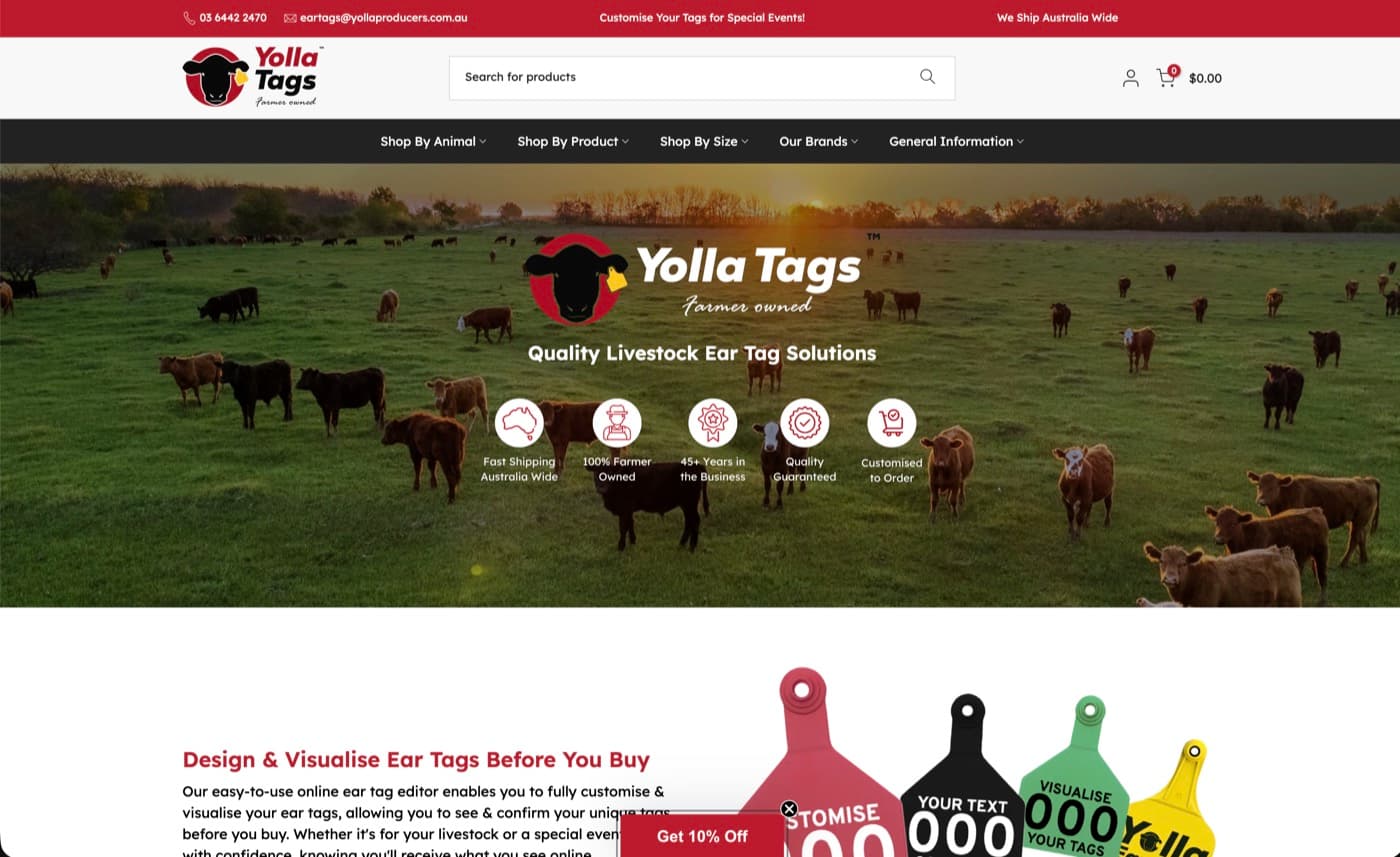
At a glance
A new entrant to the Australian agricultural supplies market had no website, no brand recognition, and no digital marketing channels. They were competing directly against established businesses with years of market share behind them and needed to build everything from scratch and turn a profit within twelve months.
Nooma Logic built a complete digital presence: a custom e-commerce website with an interactive ear tag visualization tool, paired with ongoing SEO, social media management, content marketing, and paid advertising across two major platforms.
The team received their first orders within one month of launching. Within five months, they had recovered their initial investment and moved into profit. The visual customization tool established a clear point of difference that no direct competitor offered at the time.
- A Shopify website was designed and structured to communicate credibility and guide first-time buyers through to a confident purchase.
- A custom on-site ear tag editor was built, allowing buyers to select product type, input customization requirements, and see a visual representation of their finished tags before placing an order.
- SEO monitoring and optimization were established from launch, targeting the specific terms Australian farmers and producers use when sourcing ear tag supplies.
- Organic social media channels were created and managed with content written for the agriculture community, consistent in tone with the brand from day one.
- A blog content and email marketing program was produced, giving the team a way to stay in contact with customers between purchases and build familiarity over time.
- Facebook Ads and Google Ads campaigns were built and managed, with targeting informed by demographic and geographic data relevant to Australian agriculture.
- Process documentation and channel visibility were provided at handover so the team could build their own understanding of what was running and why.
First orders received within 1 month of launch
Investment recouped within 5 months of launch
A full brand identity guide developed
A unique custom tag visualizer tool implemented
The Background: A genuine product in a market that already had its favourites
The Australian agricultural supplies market is not hostile to new entrants, but it is not particularly welcoming either. The same brands have held shelf space, both physical and digital, for years. Farmers tend to buy from suppliers they know. Trust is built slowly, and a new business earns it the hard way.
This team understood that reality. They were not launching with a gimmick. They had a genuine product range, sourced from reliable manufacturers, and a clear belief that the buying experience for agricultural consumables like ear tags could be meaningfully better than what most existing suppliers were offering.
What they did not have was any digital infrastructure. No website, no social presence, no search visibility, no digital marketing channels. They were starting from a blank page in a market where their competitors had years of established digital presence.
They came to us with two clear goals: build brand awareness within the agriculture community, and reach profitability within their first year. Both felt ambitious for a brand that did not yet exist online.
The Friction: Starting from nothing in a market built on familiarity
The core challenge here was not a broken system. It was the absence of any system at all.
Breaking into an established market without brand recognition is a particular kind of difficulty. You cannot rely on word of mouth that has not had time to develop. In agricultural supplies, that problem runs deeper than it might for a consumer brand. Farmers are practical and risk-aware buyers. They are not inclined to try an unknown supplier on a whim.
What the team needed was a digital presence that did two things at once: communicate credibility to earn initial trust, and offer something genuinely different from what established competitors were providing. A standard website and a product catalogue would not be enough. Without a point of difference, there is no reason for a cautious buyer to take a chance on a brand they have never heard of.
Our Process
Step one: Understanding the market and the opportunity
We began by mapping the competitive landscape and the team's actual goals before touching a single tool or platform.
The agriculture market is not short of digital storefronts. What it lacked, at the time, was any supplier offering buyers the ability to see their customized product before placing an order. Ear tags are personalized items. Farmers and producers select colours, numbering sequences, and branding specific to their operation. Ordering blind, then waiting for physical samples or corrections, is slow and frustrating. That gap was the opportunity, and we recommended building the entire digital strategy around it.
There were three reasons we felt strongly about this approach.
The first was simplicity for the buyer. Agricultural buyers are not early adopters. They are time-poor, practical, and often skeptical of anything that feels complicated. A visual customization tool needed to be genuinely easy to use, not a technical showpiece. If it required instructions, it would not get used.
The second was competitive positioning. Rather than trying to out-spend established competitors on advertising from day one, we focused on building something no competitor offered. A distinctive product experience compounds over time. It earns organic mentions, repeat visits, and word-of-mouth in ways that ad spend alone cannot replicate.
The third was the one we feel most strongly about: keeping decision-making with the buyer. Automation and digital tools are most useful when they give people more confidence, not less control. The visualization tool was designed so that the customer makes the final call on exactly what they are ordering and can buy with confidence.
Step two: The build
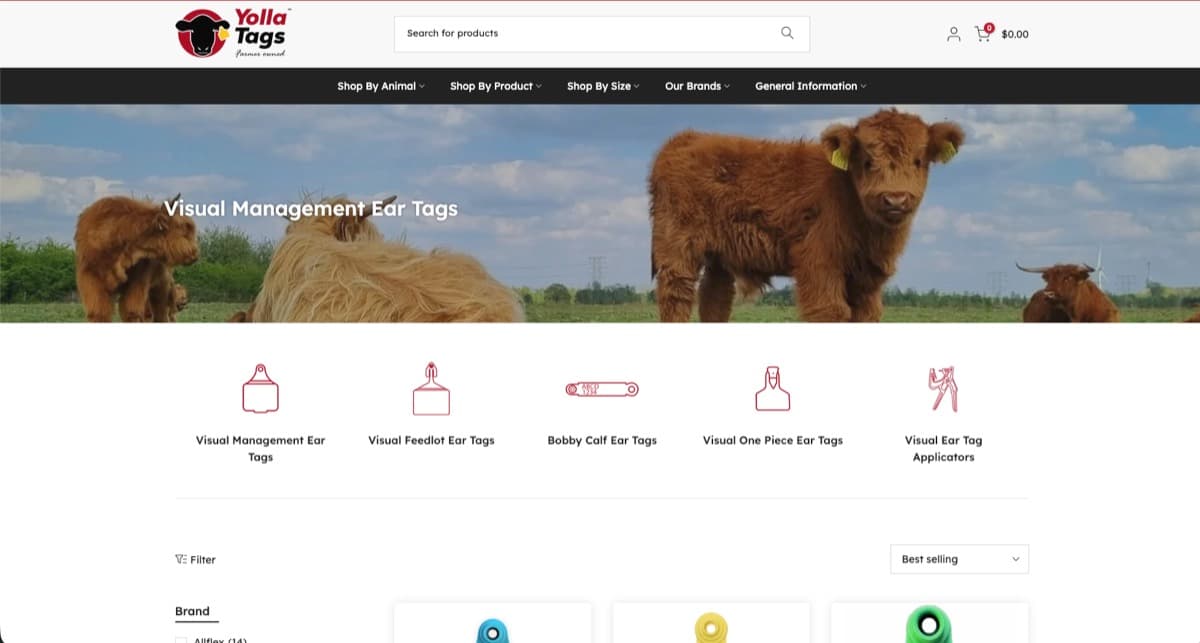
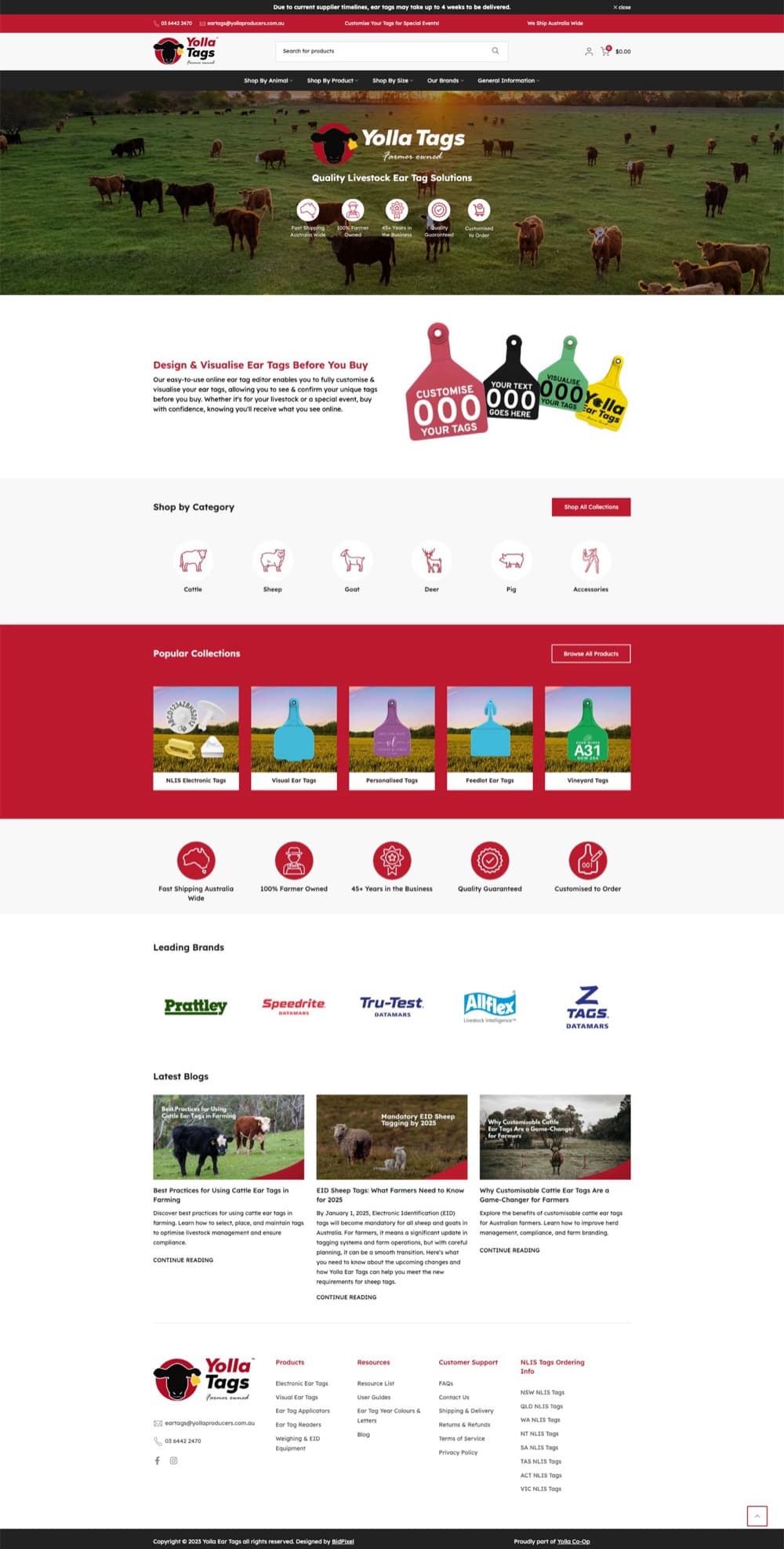
The website was designed to carry the full weight of the brand's first impression. For a business with no prior recognition, that meant doing a great deal of work: communicating credibility, showcasing the product range clearly, and guiding a cautious first-time buyer through to a confident purchase.
The homepage established the brand positioning immediately. The tagline "Made by Farmers, for Farmers" was central to the visual design, signalling to the target audience that this was not a generic reseller but a business that understood their world. Product pages were structured to highlight range and quality without overwhelming the buyer with information.
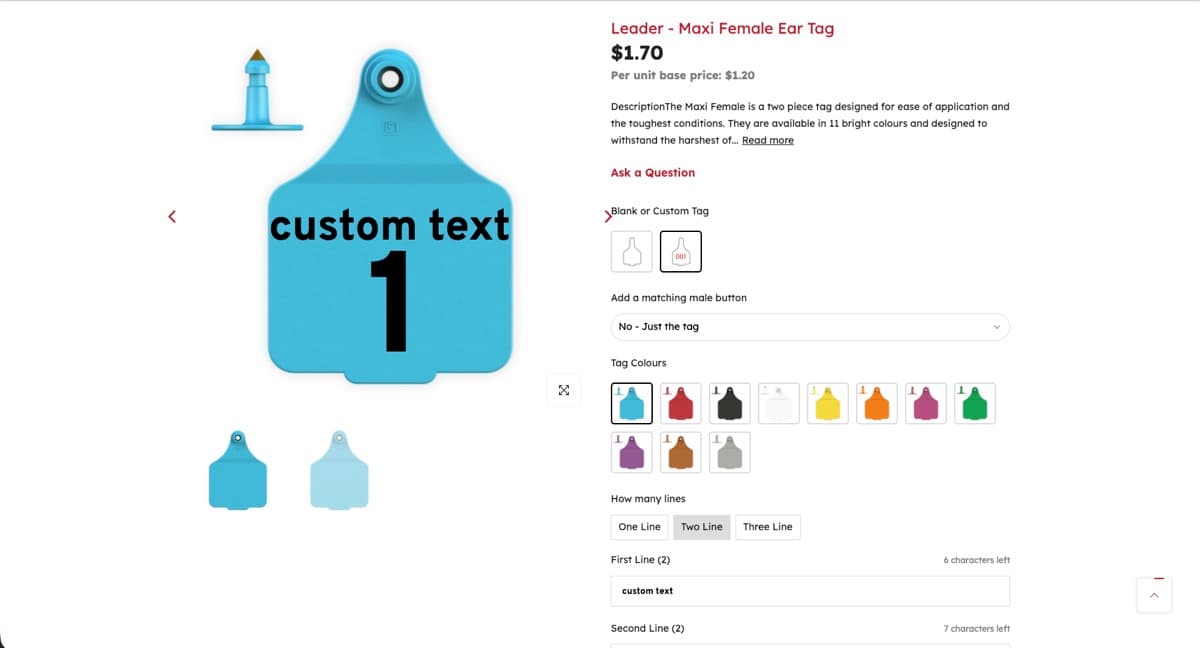
The standout feature was the on-site ear tag editor. A customer could select their product type, input their customization requirements, and see a visual representation of their finished tags before placing an order. In a product category where mistakes mean reprints, delays, and frustration, this was a meaningful practical improvement. The tool reduced the anxiety of ordering from a new supplier and gave buyers a concrete reason to choose this site over a competitor.
Alongside the website, we established the full digital marketing stack from the ground up. Search engine optimization work began at launch. Social media channels were created and maintained with content tailored for the agriculture community. Email marketing and regular blog content gave the team a way to stay in contact with customers between purchases. Paid advertising campaigns were strategically built based on researched data to run targeted content that spoke directly to farmers at each stage of their customer journey.
Every channel was considered in relation to the others. The goal was not just traffic but a coherent brand experience across every touchpoint a potential customer might encounter.
Step three: The handover
Because this was a full marketing engagement rather than a one-off build, we worked alongside the team throughout the early months, adjusting campaigns based on what the data showed and refining the content strategy as the audience grew. Where possible, we documented processes and gave the team visibility into what was running and why, so they could build their own understanding of the channels rather than simply depending on us to operate them.
The Result: A foothold earned in the first season
Within one month of launching, orders were coming in. For a brand that did not exist digitally twelve months earlier, that is a meaningful result. It meant the website was credible, the products were findable, and the buying experience was working.
By the five-month mark, the team had recovered their full initial investment and moved into profit. That outcome was ahead of their own target, and it reflects the compounding effect of building all the digital marketing channels in parallel rather than one after another.
The visual customization tool proved to be more than just a nice feature. It functioned as a genuine conversion asset. Buyers who might otherwise hesitate when ordering from an unfamiliar supplier had a concrete way to verify exactly what they were purchasing before committing. The team now holds a clear point of difference in their market that competitors have not replicated, and that is not a small thing in an industry where most suppliers offer near-identical buying experiences.
We are also proud of what we did not build. No over-engineered platform, no unnecessary complexity, no expensive infrastructure that the team would struggle to operate independently. Every element was chosen because it served a clear purpose at a realistic cost for a business in its first year. The result is a digital presence that fits the way the team works and is built to carry them well beyond that first successful season.
What changed for Yolla Ear Tags
First orders within 1 month of launch
Investment recouped within 5 months
Custom tag visualizer tool implemented
What could your business look like a year from now?
If you are starting from scratch or trying to find a foothold in a competitive market, let's work out what makes sense for your situation. No jargon, no pressure, just a clear conversation about where the real opportunities are and whether we can help.
Book a Clarity SessionOther businesses, other problems
Want results like these?
Every project starts with a conversation. Let’s talk about what you need and how we can help.